
Introduction
The organizations that dominate today’s economy are not necessarily the largest or the most established—they are the ones that can learn, adapt, and reskill faster than everyone else. In a world shaped by automation, artificial intelligence, and constant digital disruption, skills are becoming the true currency of success.
Recent studies reveal that nearly 50% of all employees will need reskilling by 2030, while 94% of employees say they would stay longer at companies that invest in their learning and development. At the same time, the traditional model of training—static courses, one-time workshops, and generic content—is rapidly becoming obsolete.
Traditional training methods are rapidly becoming obsolete, especially as organizations recognize the limitations of traditional paper-based training.
This shift has led to the rise of modern LMS platforms, which are redefining how organizations approach learning. These platforms go far beyond basic course delivery. They create intelligent, data-driven ecosystems that focus on skills-based learning, continuous development, and measurable business impact.
For companies aiming to stay competitive, modern LMS platforms are no longer optional—they are a foundational part of a future-ready digital learning strategy.
What Are Modern LMS Platforms?
Modern LMS platforms (Learning Management Systems) are advanced, cloud-based solutions designed to manage, deliver, and optimize learning experiences at scale. Unlike traditional learning management systems that primarily acted as content repositories, modern LMS platforms are built with a learner-first approach and powered by cutting-edge technologies.
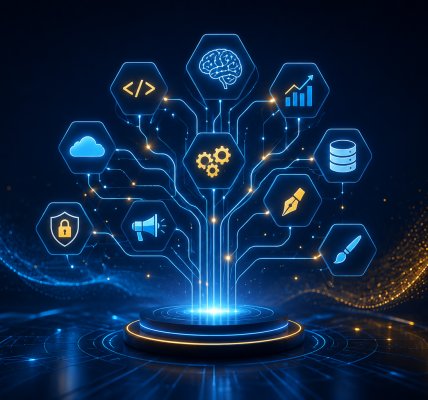
These platforms integrate:
- Artificial Intelligence (AI) for personalized learning recommendations
- Machine Learning (ML) for predictive skill development
- Advanced analytics for tracking performance and engagement
- Cloud infrastructure for scalability and accessibility
- API integrations to connect with HR, CRM, and enterprise tools
Modern LMS platforms are designed to support a wide range of use cases, including corporate training platforms, higher education, professional certification programs, and enterprise workforce development initiatives.
To better understand this shift, it’s important to recognize the difference between learning systems and standalone courses.
The Rise of Skills-Based Learning
Skills-based learning is a transformative approach that focuses on developing specific, measurable, and job-relevant competencies rather than simply completing courses.
Traditional learning models often measure success through completion rates or test scores. However, these metrics do not necessarily reflect real-world capability. Skills-based learning shifts the focus toward outcomes—what learners can actually do after training.
Why Skills-Based Learning Matters
- Improves workforce readiness by focusing on practical skills
- Enhances employee performance in real-world scenarios
- Supports career progression through targeted development
- Aligns learning with business goals for measurable impact
Modern LMS platforms play a critical role in enabling this shift by providing tools for competency mapping, skill tracking, and adaptive learning.
Key Features of Modern LMS Platforms
Personalized Learning Experiences
One of the defining features of modern LMS platforms is their ability to deliver personalized learning journeys. Using AI and learner data, these systems analyze behavior, preferences, and performance to recommend relevant content.
This ensures that learners are not overwhelmed with unnecessary material and can focus on acquiring the skills that matter most.
Skill Mapping and Gap Analysis
Modern LMS platforms enable organizations to create detailed competency frameworks. These frameworks define the skills required for each role and compare them with current employee capabilities.
This allows organizations to:
- Identify skill gaps accurately
- Design targeted training programs
- Monitor progress over time
Adaptive Learning Technology
Adaptive learning technology ensures that content is dynamically adjusted based on learner performance. If a learner struggles with a topic, the platform provides additional resources. If they excel, it accelerates their progress. This evolution is further accelerated by AI-powered learning tools for skill development, which personalize content in real time.
This results in a more efficient and engaging learning experience.
Microlearning and On-Demand Training
Modern learners prefer short, focused content that fits into their busy schedules. Microlearning delivers training in bite-sized modules that are easy to consume and retain.
Research shows that microlearning can improve retention rates by up to 80%, making it a key component of effective eLearning solutions.
Mobile Learning and Accessibility
With remote work becoming the norm, mobile accessibility is essential. Modern LMS platforms are designed with a mobile-first approach, enabling learners to access content anytime, anywhere.
This flexibility supports continuous learning and improves engagement.
Gamification and Engagement Tools
Gamification elements such as badges, leaderboards, and rewards make learning more interactive. These features tap into motivation and encourage learners to complete courses and achieve milestones.
Studies indicate that gamification can increase engagement by up to 60%.
Social and Collaborative Learning
Modern LMS platforms incorporate social learning features such as discussion forums, peer reviews, and group projects. This fosters collaboration and knowledge sharing, which are essential for deep learning.
Advanced Analytics and Reporting
Data is at the core of modern LMS platforms. These systems provide insights into:
- Learner engagement
- Skill progression
- Course effectiveness
- Training ROI
This enables organizations to make data-driven decisions and continuously improve their learning strategies.
Integration with Enterprise Systems
Modern LMS platforms integrate seamlessly with HR systems, performance management tools, and CRM platforms. This creates a unified ecosystem where learning is directly linked to business outcomes.
How Modern LMS Platforms Support Skills-Based Growth
Continuous Employee Upskilling
Modern LMS platforms make it easy for employees to continuously update their skills. This is especially important in industries where knowledge becomes outdated quickly.
Organizations that prioritize continuous learning are significantly more likely to innovate and stay ahead of competitors.
Aligning Learning with Business Goals
Training programs are most effective when they align with organizational objectives. Modern LMS platforms allow companies to connect learning initiatives with strategic goals such as digital transformation, customer experience, and operational efficiency.
Career Development and Talent Growth
Employees are more engaged when they see a clear path for growth. Modern LMS platforms provide structured learning paths that guide employees toward career advancement.
This not only improves engagement but also helps organizations build a strong internal talent pipeline.
Improving Employee Retention
Employee retention is closely linked to development opportunities. Organizations that invest in learning and development experience significantly higher retention rates.
Modern LMS platforms contribute to this by offering meaningful and personalized learning experiences.
Enhancing Organizational Agility
In a rapidly changing business environment, agility is critical. Modern LMS platforms provide real-time insights into workforce capabilities, enabling organizations to respond quickly to new challenges.
Benefits of Modern LMS Platforms
Improved Learning Outcomes
Personalized and adaptive learning leads to better knowledge retention and skill acquisition.
Cost-Effective Training Solutions
Digital learning reduces costs associated with travel, instructors, and physical materials.
Scalability and Flexibility
Modern LMS platforms can scale to accommodate organizations of all sizes, from startups to global enterprises.
Data-Driven Decision Making
Advanced analytics provide valuable insights that help organizations optimize their training strategies.
Enhanced Employee Experience
User-friendly interfaces and engaging content improve the overall learning experience.
Challenges and Considerations
Change Management
Adopting a new LMS requires cultural and operational changes. Organizations must invest in training and communication to ensure successful adoption.
Content Quality and Relevance
The effectiveness of an LMS depends heavily on the quality of its content. Organizations should prioritize creating relevant and up-to-date learning materials.
Integration and Technical Complexity
Ensuring seamless integration with existing systems can be challenging. Choosing the right platform is crucial for long-term success.
Future Trends in Modern LMS Platforms
AI-Powered Learning Ecosystems
Artificial intelligence will continue to enhance personalization, automate content creation, and provide predictive insights.
Immersive Learning Technologies
Virtual reality (VR) and augmented reality (AR) will enable hands-on training experiences in safe environments.
Skills Intelligence and Workforce Analytics
Modern LMS platforms will evolve into comprehensive systems that provide deep insights into workforce capabilities.
Hyper-Personalized Learning Experiences
Future LMS platforms will deliver highly tailored learning experiences that adapt in real time to individual needs.
Conclusion
Modern LMS platforms are transforming the way organizations approach learning and development. By focusing on skills-based growth, they enable employees to build competencies that directly impact performance and business success.
With advanced features such as AI-driven personalization, adaptive learning, and real-time analytics, modern LMS platforms provide a powerful foundation for workforce development. As the pace of change continues to accelerate, organizations that invest in these platforms will be better positioned to thrive in the future.
Frequently Asked Questions (FAQs)
What are modern LMS platforms?
Modern LMS platforms are advanced learning management systems that use AI, analytics, and cloud technology to deliver personalized learning experiences.
How do modern LMS platforms support skills-based learning?
They provide tools such as skill mapping, adaptive learning, and analytics to track and improve skill development.
Why are modern LMS platforms important?
They help organizations stay competitive by enabling continuous learning and workforce adaptability.
What features should I look for in an LMS?
Key features include personalization, mobile access, analytics, integrations, and scalability.