
Business Process Automation: Benefits, Examples, and Tools (2026 Guide)
Modern businesses are under constant pressure to move faster, reduce costs, improve customer experiences, and stay competitive in a rapidly evolving digital economy. Manual workflows and repetitive operational tasks are no longer sustainable for companies trying to scale efficiently. This…

High Income Skills to Learn in 2026: Best Skills for Career Growth
The job market is evolving faster than ever, and traditional career paths are no longer the only route to financial success. In 2026, companies care less about degrees and more about practical abilities that solve real business problems. This shift…

Future of Work 2026: Top Skills You Need to Stay Relevant
The future of work is evolving faster than ever before. Artificial intelligence, automation, remote collaboration, and digital transformation are reshaping industries across the globe. In 2026, professionals are no longer competing only with other candidates – they are competing with…

AI Content Writing Tools: Best Platforms for SEO Content in 2026
Content creation has changed dramatically over the last few years. What once required entire editorial teams, long brainstorming sessions, and hours of manual research can now be accelerated with advanced AI-powered platforms. In 2026, AI Content Writing Tools are no…
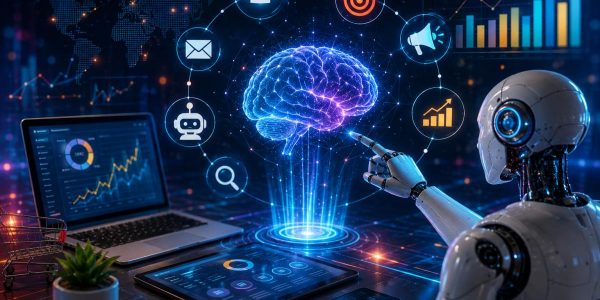
AI in Digital Marketing: How to Use AI for Better Campaign Performance
Introduction AI in Digital Marketing has rapidly evolved into the core engine behind modern campaign performance. In 2026, businesses are no longer relying on traditional manual marketing methods alone. Instead, AI-driven systems are shaping how brands target users, optimize ads,…

Best AI Tools for Business in 2026: Top Picks for Automation and Growth
Artificial intelligence is no longer an experimental technology reserved for large enterprises. In 2026, AI has become one of the biggest competitive advantages for businesses of every size. From startups and agencies to eCommerce brands and enterprise teams, companies are…

AI Tools for Productivity: Best Tools to Boost Work Efficiency in 2026
Introduction The modern workplace has undergone a massive transformation over the past few years, and in 2026, AI tools for productivity are at the center of this shift. What was once considered a futuristic concept is now a daily necessity…

How Modern LMS Platforms Support Skills-Based Growth
Introduction The organizations that dominate today’s economy are not necessarily the largest or the most established—they are the ones that can learn, adapt, and reskill faster than everyone else. In a world shaped by automation, artificial intelligence, and constant digital…

Why Continuous Learning Models Replace One-Time Training
Introduction In today’s fast-evolving digital landscape, the pace at which skills become outdated is faster than ever before. Technologies change, tools evolve, and industry standards continuously shift. In such an environment, relying on traditional one-time training programs is no longer…

Learning Operations: How Teams Streamline Training Across Departments
Introduction In today’s fast-changing business environment, organizations can no longer rely on isolated training programs or occasional workshops to keep their workforce skilled and competitive. Learning has evolved into a continuous, organization-wide function that directly impacts productivity, innovation, and long-term…