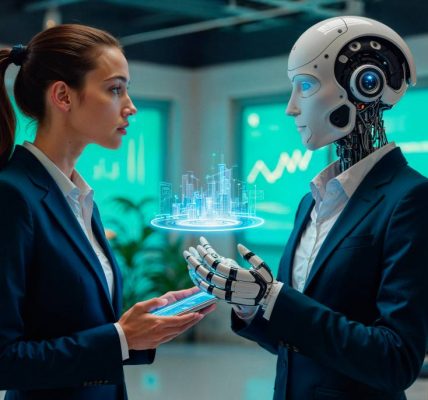

The future of work is evolving faster than ever before. Artificial intelligence, automation, remote collaboration, and digital transformation are reshaping industries across the globe. In 2026, professionals are no longer competing only with other candidates – they are competing with rapidly advancing technology.
At the same time, entirely new opportunities are emerging for people who are willing to adapt, learn continuously, and build future-ready capabilities.
The workplace of 2026 looks dramatically different from what it did just a few years ago. Traditional job roles are changing, repetitive tasks are becoming automated, and companies are prioritizing employees who can combine technical expertise with creativity, adaptability, and strategic thinking.
This shift is why understanding the future of work and developing the right top skills has become essential for long-term career growth.
In this guide, we’ll explore:
- How the future of work is changing in 2026
- Which industries are evolving the fastest
- The top skills employers are prioritizing
- Why AI literacy is becoming mandatory
- How professionals can stay competitive in an automated economy
Whether you are a student, working professional, entrepreneur, or team leader, the ability to adapt to the future of work will determine your long-term success.
Why the Future of Work Is Changing So Quickly
The biggest driver behind the future of work is technological acceleration.
Artificial intelligence, cloud computing, automation platforms, and digital collaboration tools are changing how businesses operate. Companies are now optimizing workflows using AI-powered systems, reducing manual tasks, and increasing operational efficiency.
Organizations are also investing heavily in employee reskilling and continuous learning programs. This shift has become a major priority as businesses prepare teams for AI-driven workplaces. Many companies are now creating internal learning ecosystems to help employees adapt to automation, AI tools, and evolving digital workflows. This growing trend is explored in detail in this guide on how companies are investing in employee upskilling for the future of work.
Several major trends are accelerating workplace transformation:
1. AI and Automation
AI systems can now automate repetitive workflows, customer support, data analysis, scheduling, and even content generation.
Rather than replacing all jobs entirely, automation is changing the nature of work itself.
Professionals who can work alongside AI tools will have a major advantage.
2. Remote and Hybrid Work
Remote collaboration is now normalized across industries.
Companies increasingly hire talent globally instead of locally, creating more competition but also more opportunities.
3. Skill-Based Hiring
Many companies are shifting away from degree-first hiring.
Employers now prioritize:
- Practical skills
- Problem-solving ability
- Portfolio work
- Certifications
- Adaptability
4. Rapid Industry Evolution
Entire industries are being reshaped by automation.
Automation is already transforming industries such as manufacturing, finance, customer support, logistics, and marketing. While some repetitive roles are disappearing, entirely new opportunities are emerging for professionals with adaptable technical and creative skills. This shift is explained clearly in this article on the future of work, automation, and job displacement.
The professionals who continuously upgrade their top skills will remain valuable even as industries evolve.
The Most Important Top Skills for the Future of Work
The future workplace will reward people who combine human intelligence with technological capability.
Below are the most important top skills professionals should focus on in 2026.
1. AI Literacy and AI Collaboration
AI literacy is no longer optional.
You do not necessarily need to become a machine learning engineer, but understanding how AI systems work is becoming essential in nearly every profession.
Professionals should learn:
- How generative AI works
- Prompt engineering basics
- AI workflow automation
- AI-assisted productivity systems
- Ethical AI usage
Modern AI tools are transforming how teams handle communication, research, analytics, customer support, coding, and productivity.
AI-powered productivity systems are becoming essential in modern workplaces. Professionals are now using advanced tools for research, automation, communication, content creation, and workflow optimization. One of the fastest-growing examples is Google Gemini AI, which is helping teams streamline productivity and automate repetitive processes. This guide on mastering Google Gemini AI for productivity workflows and smart automation explains how these systems are reshaping the future workplace.
Professionals who understand how to collaborate effectively with AI systems will significantly outperform those who ignore these technologies.
2. Critical Thinking and Problem Solving
As automation handles repetitive work, human value increasingly comes from complex thinking.
Critical thinking involves:
- Evaluating information accurately
- Making strategic decisions
- Solving ambiguous problems
- Identifying risks and opportunities
- Thinking creatively under uncertainty
AI can generate information quickly, but humans are still needed to:
- Interpret context
- Make ethical decisions
- Understand nuance
- Build strategy
This is why critical thinking remains one of the most valuable top skills in the future of work.
3. Adaptability and Learning Agility
The ability to learn quickly is becoming more important than static knowledge.
Technology evolves too fast for professionals to rely solely on what they learned years ago.
Employers increasingly value people who can:
- Learn new systems quickly
- Adapt to changing environments
- Upskill continuously
- Embrace experimentation
In the future workplace, learning itself becomes a competitive advantage.
Professionals who remain curious and adaptable will consistently stay ahead.
4. Digital Communication Skills
Remote and hybrid work models require stronger communication skills than traditional office environments.
Professionals must communicate clearly through:
- Video meetings
- Slack and collaboration tools
- Documentation
- Presentations
Strong digital communication improves:
- Team collaboration
- Leadership effectiveness
- Project execution
- Remote productivity
This is especially important in global teams where clarity and efficiency directly impact business performance.
5. Data Literacy
Data is now central to decision-making across industries.
You do not need to become a data scientist, but understanding how to interpret data is becoming essential.
Important areas include:
- Reading dashboards
- Understanding metrics
- Basic analytics
- Identifying trends
- Data-driven decision making
Professionals who can translate data into actionable insights will remain highly valuable.
6. Emotional Intelligence
While automation improves efficiency, emotional intelligence remains deeply human.
This includes:
- Empathy
- Leadership
- Conflict resolution
- Relationship building
- Team collaboration
In highly automated workplaces, emotional intelligence often becomes the key differentiator between average professionals and exceptional leaders.
7. Creativity and Innovation
AI can automate patterns.
Humans still excel at:
- Original thinking
- Innovation
- Creative strategy
- Vision development
- Brand storytelling
The future of work will increasingly reward professionals who can generate unique ideas and solve problems creatively.
Creativity remains difficult to automate fully.
8. Technical Fluency
Even non-technical professionals are expected to understand modern technology ecosystems.
Basic technical fluency may include:
- Understanding cloud tools
- Automation platforms
- Cybersecurity awareness
- No-code systems
- AI productivity tools
Technical fluency improves collaboration between teams and helps professionals adapt faster.
Industries Most Impacted by the Future of Work
Some industries are evolving more rapidly than others.
Technology
Software development, cybersecurity, AI engineering, cloud computing, and automation are experiencing explosive growth.
Healthcare
AI diagnostics, telemedicine, and healthcare automation are transforming patient care.
Marketing
AI-powered personalization, automation platforms, and predictive analytics are changing digital marketing.
Finance
Automation, AI fraud detection, and fintech innovation are reshaping financial services.
Education
Online learning, AI tutors, and personalized education systems are redefining learning experiences.
Professionals in these industries must continuously develop top skills to remain competitive.
How AI Is Reshaping the Future of Work
AI is not simply another technology trend.
It is fundamentally changing how work is performed.
AI systems can now:
- Generate reports
- Write code
- Analyze data
- Automate customer service
- Create content
- Assist with research
- Improve workflow efficiency
However, AI still requires human oversight.
The future workplace will likely involve humans and AI systems working collaboratively.
This means the most valuable professionals will be those who know how to:
- Use AI effectively
- Validate outputs
- Improve workflows
- Make strategic decisions
- Combine human creativity with machine efficiency
The Rise of Continuous Learning
In 2026, career growth depends heavily on continuous education.
Professionals are increasingly using:
- Online courses
- AI learning assistants
- Certifications
- Bootcamps
- Skill-based communities
Continuous learning allows individuals to:
- Stay relevant
- Increase earning potential
- Improve career flexibility
- Adapt to industry shifts
The future of work rewards people who consistently invest in skill development.
How to Prepare for the Future of Work
Preparing for the future workplace requires intentional action.
1. Build AI Skills Early
Learn how AI tools work and integrate them into your workflows.
2. Focus on Human Skills
Creativity, leadership, communication, and emotional intelligence remain difficult to automate.
3. Learn Continuously
Treat learning as an ongoing career strategy.
4. Create a Strong Digital Presence
Build:
- LinkedIn profiles
- Portfolios
- Personal websites
- Industry visibility
5. Develop Technical Awareness
Even basic understanding of modern technologies can improve adaptability.
6. Stay Industry-Aware
Follow trends, tools, and innovations shaping your field.
Common Mistakes Professionals Should Avoid
Ignoring AI
Professionals who refuse to learn AI tools may struggle to stay competitive.
Relying Only on Degrees
Skills increasingly matter more than formal qualifications alone.
Avoiding Change
Resistance to new systems and technologies limits career growth.
Neglecting Soft Skills
Technical ability alone is no longer enough.
Human-centered skills remain essential.
The Future of Leadership in 2026
Leadership is evolving alongside technology.
Modern leaders must:
- Manage distributed teams
- Understand AI systems
- Encourage innovation
- Support employee upskilling
- Balance automation with human well-being
The best leaders of the future will combine technological understanding with emotional intelligence.
Final Thoughts
The future of work is not something far away — it is already happening.
AI, automation, and digital transformation are reshaping industries faster than most professionals expected.
The good news is that opportunity is still massive for those willing to adapt.
The most successful professionals in 2026 will not necessarily be the ones with the most experience. They will be the ones who continuously learn, embrace technology, improve their top skills, and stay flexible in rapidly changing environments.
Focus on:
- AI literacy
- Critical thinking
- Communication
- Creativity
- Emotional intelligence
- Continuous learning
These capabilities will remain valuable regardless of how technology evolves.
The future workplace belongs to people who are willing to evolve with it.
The best time to start building those skills is now.